
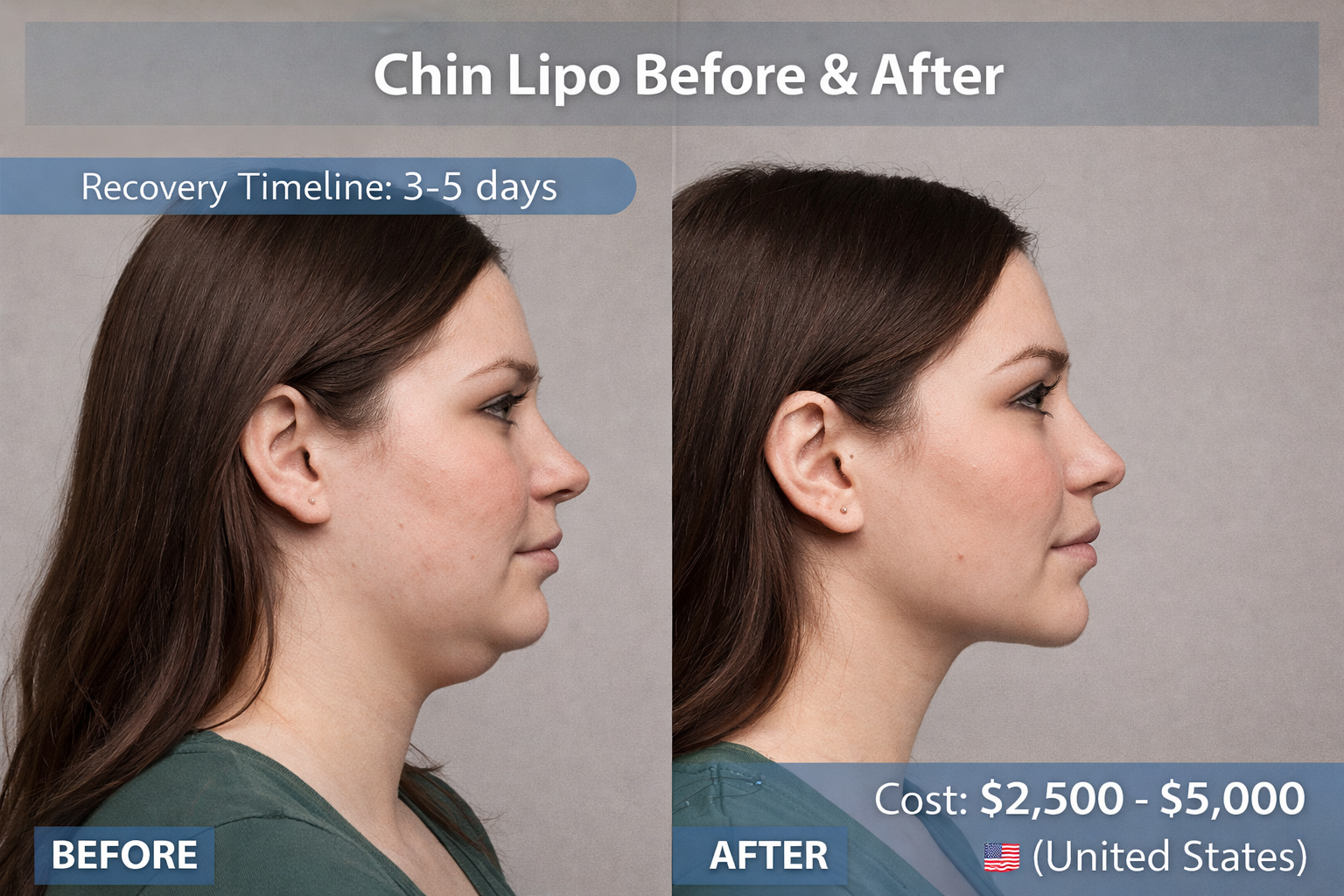
If you’ve spent hours contouring your jawline with makeup or adjusting your phone angle to hide a double chin, you are not alone. Submental fullness (the medical term for a double chin) is highly resistant to diet and exercise. For many, chin liposuction is the ultimate, permanent solution.
However, if you look at most plastic surgery clinics’ websites, their “chin lipo before and after” galleries only show the glamorous, final results at the 3-month mark. They skip the bruising, the swelling, and the awkward first week in a compression garment.
As a dedicated aesthetic researcher, I believe in absolute transparency. In this comprehensive guide, we are going to look beyond the perfect clinical photos. We will break down the raw, week-by-week healing timeline, analyze real patient data cards (including estimated costs), and help you figure out if you are truly an ideal candidate for submental liposuction.
Understanding the “Before”: Are You an Ideal Candidate?
Before we look at the dramatic transformations, it is crucial to understand that chin lipo is not a magic wand for everyone. A board-certified plastic surgeon will look at very specific anatomical factors before approving you for suction-assisted lipectomy (SAL).
Here is exactly what determines if you will get that sharp, snatched jawline or if you might need an alternative procedure:
1. The “Pinch Test” (Subcutaneous Fat vs. Deep Fat)
Chin lipo only targets subcutaneous fat—the soft, squishy fat resting just beneath the skin.
- Try this at home: Look in the mirror and gently pinch the fat under your chin. If you can grab about 1 to 2 inches of pinchable fat, you are likely a great candidate.
- If the fullness feels deep and tight (subplatysmal fat behind the platysma muscle), liposuction alone will not fix it.
2. Skin Elasticity is Everything
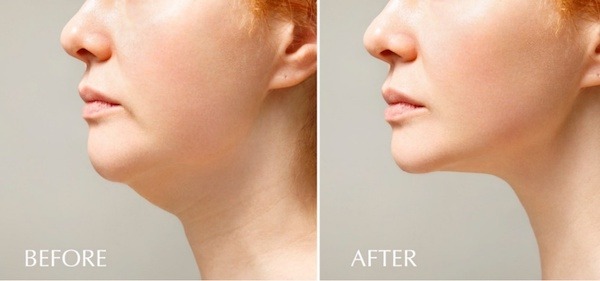
This is where many botched chin lipo cases happen. Liposuction removes the volume (the fat), but your skin must have the natural elasticity to “snap back” and shrink around your newly contoured jawline.
- Good Elasticity: The skin retracts beautifully, leaving a sharp, youthful neck angle.
- Poor Elasticity: Removing the fat might leave you with loose, sagging skin (often called a “turkey neck”). In this case, a surgeon will likely recommend combining lipo with a neck lift.
Here is a quick breakdown to help you understand the difference:
| Feature | Ideal Chin Lipo Candidate | Needs a Neck Lift Instead |
| Skin Type | High elasticity; skin easily “snaps back” | Thin, crepey, or visibly sagging skin |
| Target Area | Localized fat pocket under the chin (submental fat) | Loose muscle bands (platysma) and excess skin |
| Typical Age Group | 20s to late 40s (generally) | 50+ or post-massive weight loss |
| Scarring | Tiny, virtually invisible micro-incisions | Longer incisions behind the ears and under the chin |
3. Your Overall BMI and Weight Stability
While chin lipo is a localized procedure often performed under local anesthesia, it is not a weight-loss tool. The most striking chin lipo before and after photos come from patients who are at or near their ideal body weight (typically a BMI under 30) but have a genetic predisposition to storing fat under the chin. If your weight fluctuates by 15-20 lbs frequently, it can alter your long-term results.
The Raw Reality: A Week-by-Week Chin Lipo Timeline
Most plastic surgery websites jump straight from the “before” picture to a glamorous 3-month “after” shot. But what happens in between? If you don’t know what to expect, the first two weeks of recovery can be terrifying.
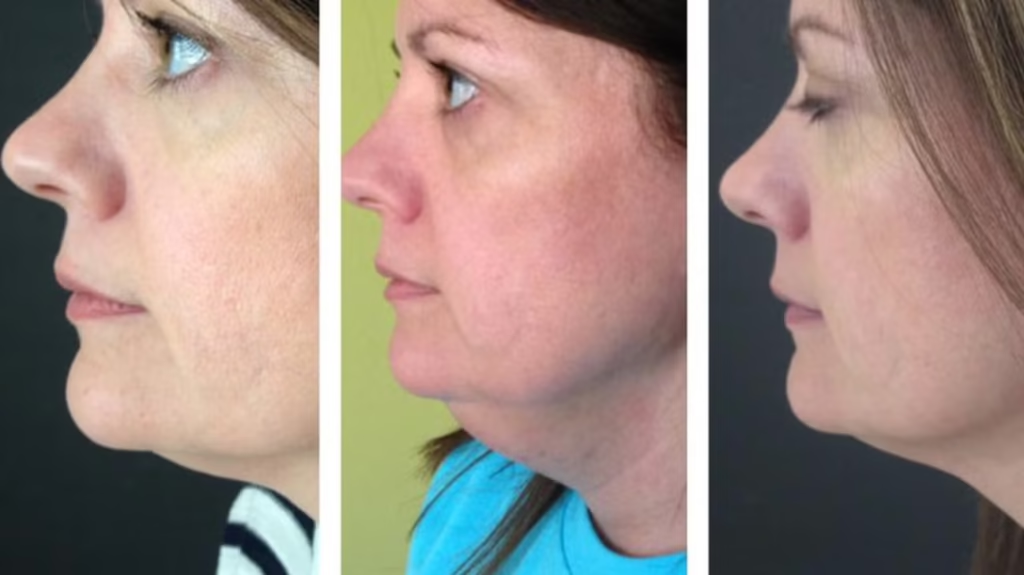
Let’s look at the real, unfiltered timeline of submental liposuction recovery. Below are realistic transformations paired with detailed patient data cards, so you know exactly what goes into getting these results.
Days 1 to 3: The “Swollen & Wrapped” Phase
Immediately after the procedure, you will not see a sharp jawline. In fact, your neck might look larger than it did before the surgery. This is completely normal and is caused by swelling and the tumescent fluid injected during the procedure. You will be wearing a tight facial compression garment 24/7 during this phase.

Patient Profile & Data Card:
- Age/Gender: 28, Female
- Procedure: Tumescent Submental Liposuction
- Anesthesia: Local Anesthesia with oral sedation
- BMI / Weight: 24.5 / 150 lbs
- Estimated Cost: $3,200
- Sarah’s Analysis: Notice the drainage pads under the strap. Leaking a pinkish fluid during the first 48 hours is a standard part of the healing process.
Week 1 to Week 2: The “Frog Neck” Phase and Bruising
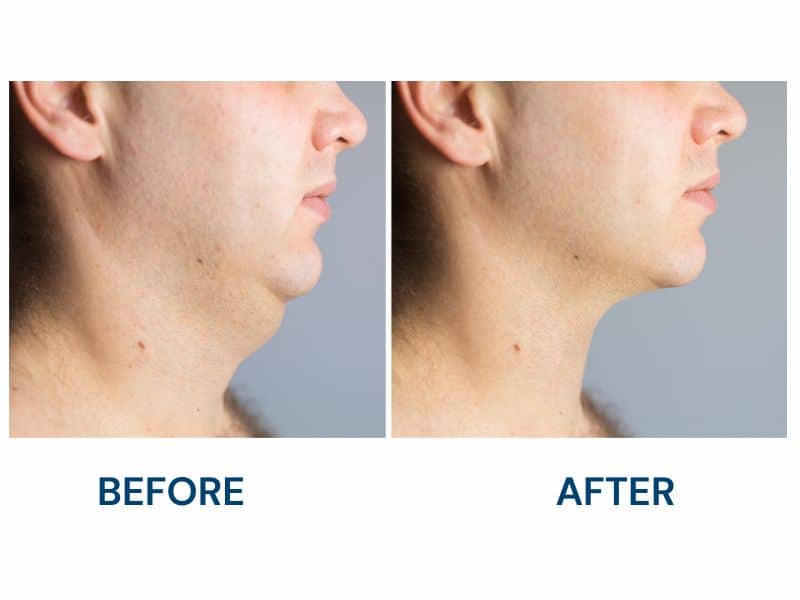
By the end of the first week, you can usually transition to wearing your compression garment only at night. However, this is when bruising peaks. Many patients experience what is commonly called a “frog neck”—the area under the chin feels hard, stiff, and lumpy. This hardness is called fibrosis (internal scar tissue forming as the skin adheres to the muscle).
Patient Profile & Data Card:
- Age/Gender: 35, Male
- Procedure: SmartLipo™ (Laser-assisted liposuction)
- Fat Volume Removed: 45 cc’s
- BMI / Weight: 27 / 185 lbs
- Recovery Protocol: Started Lymphatic Drainage Massages at Day 7
- Sarah’s Analysis: Men typically have thicker skin and heavier bleeding, resulting in more prominent bruising. Laser-assisted lipo helped tighten the skin simultaneously here.
Month 3 to Month 6: The Final Snatched Jawline
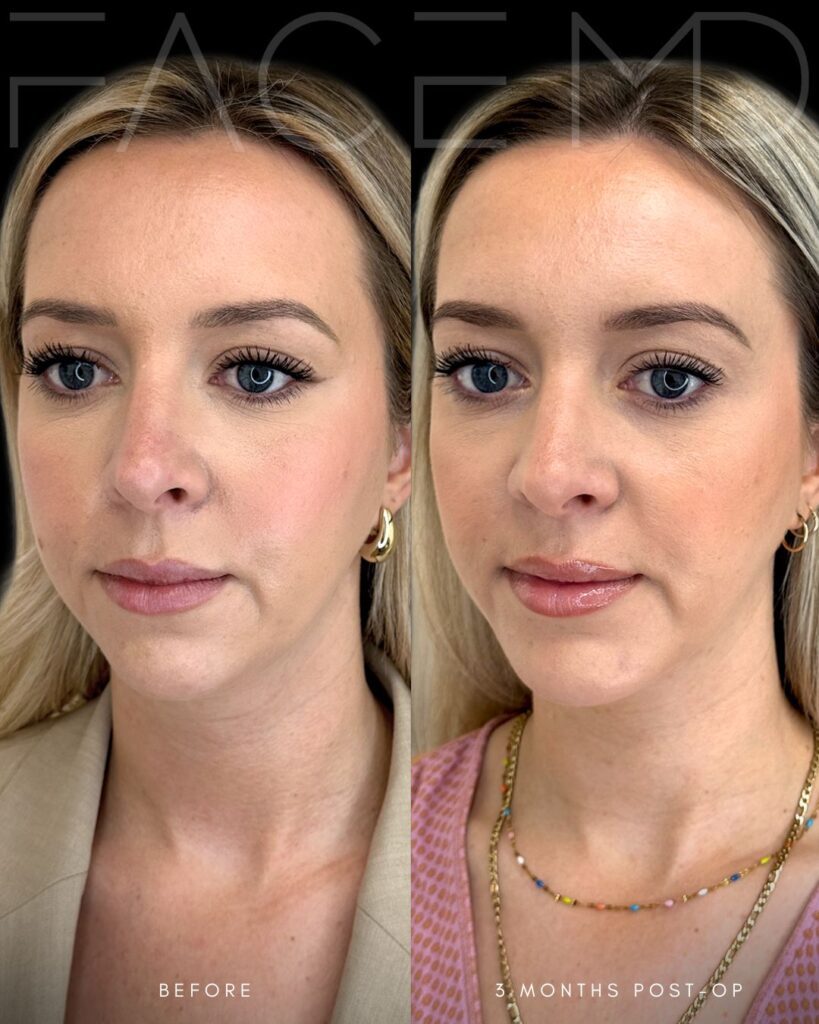
Patience pays off. By the 3-month mark, 90% to 100% of the residual swelling has subsided. The skin retraction is complete, and the sharp, contoured angle between the chin and the neck is finally visible. The results at this stage are considered permanent, provided you maintain a stable weight.
Patient Profile & Data Card:
- Age/Gender: 42, Female
- Procedure: Traditional Microcannula Liposuction
- Combined With: No other procedures (Standalone)
- BMI / Weight: 22 / 135 lbs
- Estimated Cost: $4,500 (Performed by a Board-Certified Plastic Surgeon in NYC)
- Sarah’s Analysis: Even in her early 40s, this patient had excellent skin elasticity. The microcannula technique allowed for precise sculpting without the need for a neck lift.
Before and After: Factors That Make or Break Your Results
You’ve seen the success stories and the timeline, but what separates a perfectly sculpted, natural-looking jawline from a “botched” result?
Achieving a flawless chin lipo before and after transformation isn’t just about removing the fat; it’s about precision, skin care, and what you do when you go home. Here are the three critical factors that will dictate your final outcome.
1. Surgeon Expertise (Avoiding “Botched Chin Lipo”)
The neck is a highly complex anatomical area packed with major blood vessels, glands, and nerves (specifically the marginal mandibular nerve). Going to an underqualified provider just to save a few dollars can lead to disastrous, irreversible results.
A botched chin lipo procedure usually happens due to over-suctioning or uneven fat removal. This can leave you with:
- Contour Irregularities: Unnatural lumps, bumps, or divots under the skin.
- The “Cobra Deformity”: A hollowed-out look in the center of the neck with fat left on the sides.
- Nerve Damage: Temporary or permanent asymmetry in your smile.
How to avoid this: Always ensure your procedure is performed by a Board-Certified Plastic Surgeon (look for certification from the American Board of Plastic Surgery – ABPS) or a specialized facial plastic surgeon. They understand how to leave a thin, protective layer of fat attached to the skin to ensure a smooth, natural-looking drape.
2. Post-Op Care & The Crucial Compression Garment
Your surgeon does 50% of the work in the operating room; the other 50% happens during your recovery at home. The single most important factor in your healing process is your facial compression garment (often called a chin strap).
Why is it so critical?
- Prevents Hematomas: It applies constant pressure to stop blood and fluid from pooling in the empty space where the fat used to be.
- Skin Adhesion: It literally forces your skin to stick to the underlying neck muscle (the platysma) so it heals tight and flat.
- Reduces Fibrosis: Consistent pressure minimizes the formation of hard, lumpy scar tissue under the skin.
Pro Tip for US Patients: Most surgeons recommend wearing the garment 24/7 for the first 1 to 2 weeks, then only at night for another 2 to 4 weeks. (For a deep dive into daily care, check out our complete Chin Lipo Recovery Timeline guide).

3. Combining Lipo with Skin Tightening Technologies
If you have mild to moderate skin laxity (looseness) and are worried your skin won’t snap back after the fat is gone, a modern surgeon won’t rely on traditional liposuction alone.
To guarantee a sharp “after” photo, top clinics across the US often combine submental liposuction with advanced, FDA-approved skin-tightening technologies during the same procedure:
- Smartlipo™ (Laser-Assisted Lipo): Uses a laser fiber to melt the fat and stimulate collagen production from the inside out.
- FaceTite / BodyTite (Radiofrequency): Uses thermal energy to shrink-wrap the skin tissue instantly.
- Renuvion® (Helium Plasma): Delivers cold plasma energy under the skin for dramatic, immediate tissue contraction.
If your surgeon suggests one of these add-ons, it is usually to ensure your skin retracts perfectly, avoiding the need for a more invasive neck lift.
Chin Lipo vs. Non-Surgical Alternatives: Which Gives Better Results?
Many patients searching for chin lipo before and after photos are also secretly hoping they can achieve those same results without going under the knife. The US aesthetic market is flooded with non-surgical alternatives, but do they actually work as well as traditional liposuction?
Let’s compare submental lipo with the two most popular FDA-approved non-surgical treatments: Kybella and CoolSculpting.
Of course, submental liposuction is just one piece of the facial rejuvenation puzzle. Many of our readers exploring jawline contouring are simultaneously researching complementary non-surgical treatments — particularly for the lip and perioral area. If you’re curious about how injectables work in other zones of the face, our detailed guide on lip filler before and after results breaks down realistic expectations, timelines, and costs in the same no-filter format. Now, back to the submental zone — here’s how the non-surgical options actually stack up against chin lipo.
1. Chin Lipo vs. Kybella (Deoxycholic Acid)
Kybella is an FDA-approved injectable treatment that uses synthetic deoxycholic acid to permanently destroy fat cells under the chin. Sounds perfect, right? However, the reality of the Kybella before and after timeline is often harsher than lipo.
- The Reality of Kybella: While it requires no incisions, Kybella causes intense, immediate swelling. Patients often describe having a “bullfrog neck” for up to two weeks after each session.
- The Cost Trap: A single Kybella session costs around $1,200 to $1,500. Most patients require 3 to 6 sessions spaced a month apart to see a noticeable difference.
- The Verdict: Chin lipo is a “one-and-done” procedure that physically vacuums the fat away in 45 minutes, often for less total money than a full round of Kybella injections.
2. Chin Lipo vs. CoolSculpting (Cryolipolysis)
CoolSculpting uses a specialized applicator to freeze and destroy fat cells (a process called cryolipolysis). The dead fat cells are then naturally flushed out by your body over several months.
- The Reality of CoolSculpting: It is completely non-invasive with zero downtime. However, the applicator only treats the exact block of fat it can suction into the cup, which can sometimes leave uneven borders or “shark bite” indentations.
- The Rare Risk: There is a rare but severe risk of Paradoxical Adipose Hyperplasia (PAH), where the frozen fat actually hardens and expands instead of shrinking (requiring liposuction to fix).
- The Verdict: If you have a very tiny, isolated pocket of fat, CoolMini (the submental CoolSculpting applicator) might work. But for complete, sculpted jawline contouring, chin lipo provides far superior, predictable results.
Here is our detail guide on Under Eye Filler Before and After with visuals.
Summary Comparison Table: Finding Your Best Option
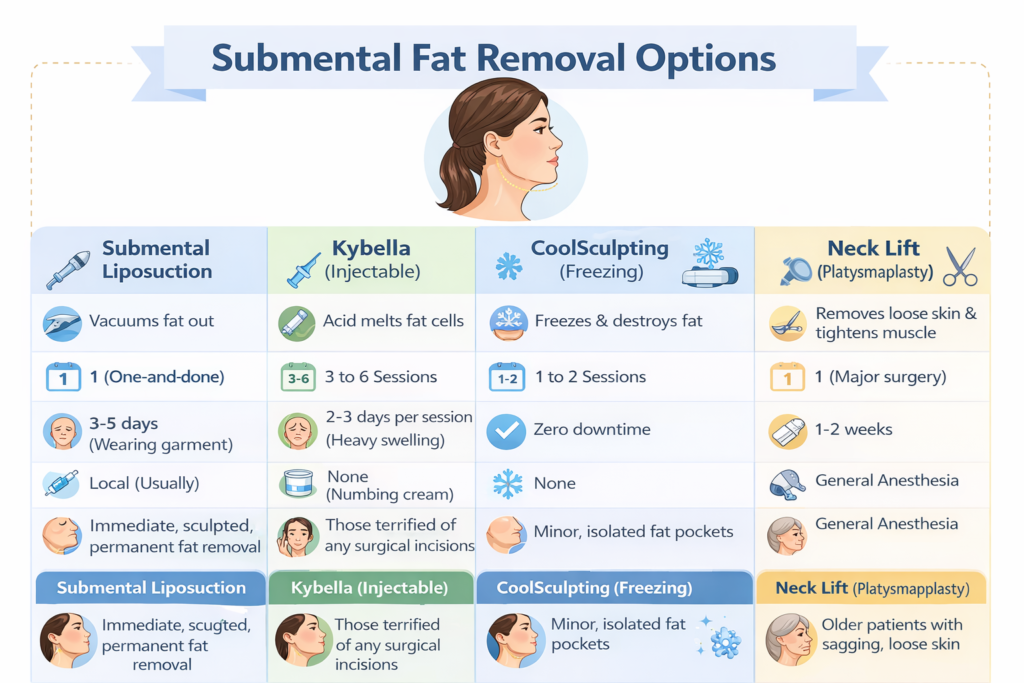
To make your decision easier, here is a breakdown of how chin lipo stacks up against the alternatives:
| Feature | Submental Liposuction | Kybella (Injectable) | CoolSculpting (Freezing) | Neck Lift (Platysmaplasty) |
| How It Works | Physically vacuums fat out | Acid melts fat cells | Freezes and destroys fat | Removes loose skin & tightens muscle |
| Number of Sessions | 1 (One-and-done) | 3 to 6 sessions | 1 to 2 sessions | 1 (Major surgery) |
| Downtime | 3 – 5 days (Wearing garment) | 2 – 3 days per session (Heavy swelling) | Zero downtime | 1 – 2 weeks |
| Anesthesia | Local (Usually) | None (Numbing cream) | None | General Anesthesia |
| Best For… | Immediate, sculpted, permanent fat removal | Those terrified of any surgical incisions | Minor, isolated fat pockets | Older patients with sagging, loose skin |
How Much Does the Transformation Cost? (The Transparent Breakdown)
You have seen the stunning transformations, but the next logical question every patient asks is: How much did that new jawline actually cost? One of the biggest frustrations with plastic surgery galleries is that they show you a flawless 3-month “after” photo but hide the price tag. Let’s break that barrier.
On average, the cost of submental liposuction in the United States ranges from $3,000 to $5,000. However, the exact price tag on a specific chin lipo before and after result depends heavily on how the procedure was performed.
Here are the main factors that influence the final bill:
- Type of Anesthesia: If your surgeon performs the procedure awake using local anesthesia (tumescent fluid) and oral sedation, you save thousands of dollars. If you are put under general anesthesia, you have to pay a separate anesthesiologist fee.
- Surgeon’s Expertise: A highly sought-after, Board-Certified Plastic Surgeon in a major metropolitan area (like NYC, Los Angeles, or Miami) will charge a premium compared to a general cosmetic surgeon in a smaller city.
- Technology Add-ons: If your procedure includes skin-tightening technologies like Renuvion® or Smartlipo™ to ensure the skin snaps back perfectly, expect the price to increase by $1,000 to $2,500.
- Facility Fees: Procedures done in a surgeon’s private, accredited in-office suite are much cheaper than those performed in a hospital or standalone surgical center.
Want the Exact Numbers? We have compiled a massive, state-by-state pricing database. To find out exactly what clinics are charging near you, learn about hidden fees (like compression garments and lymphatic massages), and explore payment plans like CareCredit, read our comprehensive Ultimate Guide to Chin Lipo Cost and Financing.
Frequently Asked Questions (FAQs)
When browsing through chin lipo before and after galleries, it is natural to have concerns about the reality of the procedure. Here are the most common questions patients ask before booking their consultation.
How long does chin lipo last? Is it permanent?
Yes, chin liposuction is considered a permanent procedure. The human body stops creating new fat cells after puberty. When the surgeon physically vacuums out the submental fat cells, they are gone forever. However, if you gain a significant amount of weight (usually 15+ lbs) after the surgery, the remaining fat cells in your neck and face can expand, which might compromise your sharp new jawline. Natural aging and skin laxity will also continue over time.
Why no caffeine after liposuction?
Your surgeon will strictly advise you to avoid coffee, energy drinks, and green tea for at least a week before and after surgery. Caffeine is a vasoconstrictor, meaning it shrinks your blood vessels. This restricts vital blood flow and oxygen to the healing tissues in your neck, which can delay healing, worsen bruising, and in severe cases, lead to tissue death (necrosis). Caffeine also raises your blood pressure, which increases the risk of post-op bleeding and hematomas.
Will losing 20 pounds get rid of a double chin?
It depends entirely on your genetics. For some people, losing 20 pounds will completely eliminate submental fullness. However, for many others, the fat under the chin is heavily dictated by DNA and is notoriously resistant to diet and exercise. If you are close to your ideal BMI and still have a double chin, weight loss will not fix it—chin liposuction is usually the only definitive solution.
How much does a chin lipo surgery cost?
In the United States, the average cost ranges from $3,000 to $5,000. This varies based on the surgeon’s expertise, the type of anesthesia used (local vs. general), and the city where the clinic is located. Adding skin-tightening technologies (like Renuvion or Smartlipo) will increase the price.
Does chin lipo leave visible scars?
This is a huge relief for most patients: chin lipo leaves virtually no visible scarring. A board-certified surgeon uses a microcannula (a very thin tube) that requires incisions no larger than a grain of rice. Typically, one tiny incision is hidden in the natural crease under your chin, and sometimes two more are hidden behind your earlobes. Within a few months, these fade into imperceptible white lines.
Conclusion: Setting Realistic Expectations
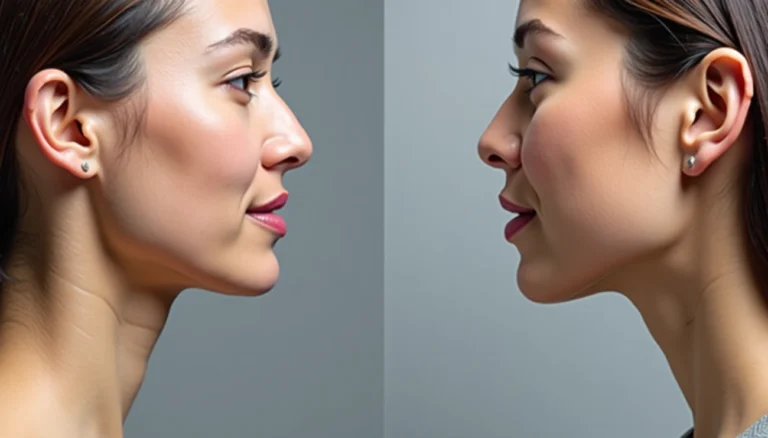
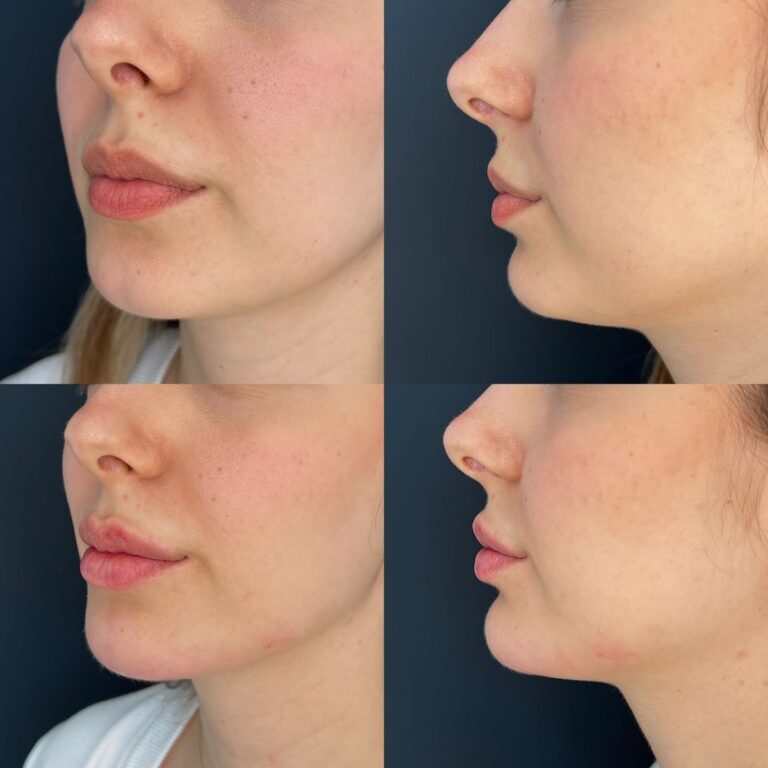
Looking at chin lipo before and after photos is the best way to visualize your potential results. However, the secret to a successful transformation lies in choosing a board-certified surgeon, having good skin elasticity, and strictly following your post-op compression garment routine. The journey from the “frog neck” phase to a snatched jawline takes patience, but for most patients, the permanent confidence boost is entirely worth it.
Medical Disclaimer: The content provided on ChinLipo.pro is for informational and educational purposes only. It is not intended to be a substitute for professional medical advice, diagnosis, or treatment. Always seek the advice of your physician or other qualified health provider with any questions you may have regarding a medical condition.
Authority Sources & References
To ensure the highest accuracy and patient safety, the information in this guide has been cross-referenced with the following authoritative medical and government entities:
- U.S. Food and Drug Administration (FDA): Guidelines on the safety and approval of tumescent liposuction devices and laser-assisted lipolysis.
- American Society of Plastic Surgeons (ASPS): National statistics and safety protocols for liposuction and submental contouring.
- National Institutes of Health (NIH) / PubMed: Clinical studies on the efficacy of subcutaneous fat removal and skin retraction.

Sarah Mitchell is a dedicated aesthetic researcher with over a decade of experience analyzing cosmetic procedures. Obsessed with data and safety, she empowers patients with verified facts, realistic before-and-after results, and honest cost breakdowns.
[…] to see what your face will look like once this swelling goes down? Our week-by-week chin lipo before and after gallery shows real patient transformations at every stage of recovery — including the bruising phase most […]
[…] like in real patients — including the bruising phase that most surgical websites hide — our chin lipo before and after gallery documents the full unfiltered transformation week-by-week, complete with patient data cards showing […]
[…] If you want to see real transformation examples and what results look like before and after surgery, see our dedicated before and after showcase here: Chin Lipo Before and After. […]
[…] for the next step? Explore our full financing guide, review real patient results for clinical term definitions, or read our complete recovery timeline to know exactly what to […]
[…] For real transformations, you can review detailed examples here:https://chinlipo.pro/chin-lipo-before-and-after/ […]
[…] before and after chin lipo photos requires understanding what you’re actually seeing. Photos taken at different stages tell […]