
Double chin liposuction cost estimates you find online rarely match what you will actually pay. Most advertised prices exclude anesthesia, facility fees, and post-procedure supplies — which can add thousands to your final bill. This guide breaks down exactly how much chin lipo costs in 2026, including every fee you will encounter, city-by-city pricing, who is a good candidate, and every financing option available.
What Does Chin Lipo Cost?
Chin liposuction costs between $2,000 and $10,000 in the United States in 2026. The sweet spot for most patients falls between $3,000 and $5,000 for a standard procedure under local anesthesia. According to 191 real patient reviews on RealSelf, the national average is $3,991 to $4,010.
That quoted price, however, is almost never the full picture. Most advertised figures cover only the surgeon’s fee — not anesthesia, facility charges, pre-operative testing, recovery supplies, or time off work. Budget an extra $500 to $1,500 on top of your quote to avoid financial surprises during recovery.
2026 National Price Range
National pricing spans a wide range because geographic market conditions, surgeon demand, and procedure complexity vary dramatically across the country.
| Price Point | Amount | What It Represents |
|---|---|---|
| National Low | $2,000 | Local anesthesia, suburban market, straightforward case |
| Most Patients Pay | $3,000 – $5,000 | Standard case, experienced board-certified surgeon |
| National Average (RealSelf) | $3,991 – $4,010 | Based on 191 verified patient-reported costs |
| National High | $10,000+ | Top-tier specialist, major metro, complex or combined procedure |
The surgeon’s fee typically represents 40 to 60 percent of the total cost. The remainder covers anesthesia, facility charges, and post-operative care.
City-by-City Pricing Across the U.S. in 2026
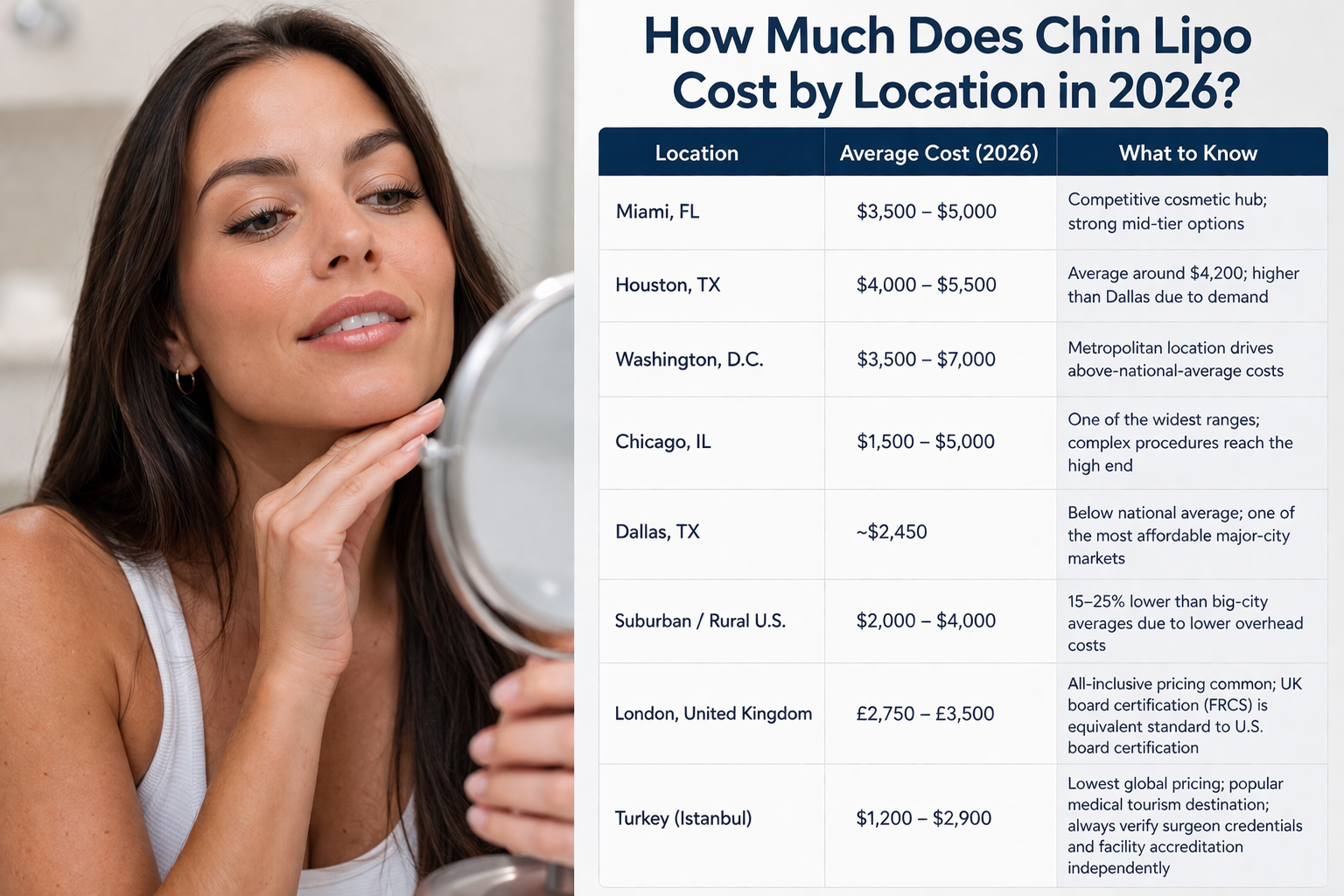
Where you live is the second biggest price driver after surgeon expertise. Major metropolitan areas carry significantly higher operating costs — rent, staffing, and demand — that translate directly into your surgical quote. Here is a breakdown of what patients are actually paying in major U.S. cities:
| City / Region | Typical Price Range | Market Notes |
|---|---|---|
| New York City, NY | $4,000 – $9,000 | Highest overhead in the country; average around $4,500 for standard cases |
| San Francisco, CA | $3,000 – $9,500 | Wide range; complex neck + chin cases reach the high end |
| Los Angeles, CA | $3,500 – $8,000 | High-volume cosmetic market; average around $3,500 for submental lipo |
| Phoenix, AZ | ~$5,000 | Above-national-average demand drives premium pricing |
| Miami, FL | $3,500 – $5,000 | Competitive cosmetic hub; strong mid-tier options |
| Houston, TX | $4,000 – $5,500 | Average around $4,200; higher than Dallas due to demand |
| Washington, D.C. | $3,500 – $7,000 | Metropolitan location drives above-national-average costs |
| Chicago, IL | $1,500 – $5,000 | One of the widest ranges; complex procedures reach the high end |
| Dallas, TX | ~$2,450 | Below national average; one of the most affordable major-city markets |
| Suburban / Rural U.S. | $2,000 – $4,000 | 15–25% lower than big-city averages due to lower overhead costs |
| London, United Kingdom | £2,750 – £3,500 | All-inclusive pricing common; UK board certification (FRCS) is equivalent standard to U.S. board certification |
| Turkey (Istanbul) | $1,200 – $2,900 | Lowest global pricing; popular medical tourism destination; always verify surgeon credentials and facility accreditation independently |
Note on medical travel: While suburban or smaller markets charge 15–25% less than major metro areas, always factor in transportation, lodging, and follow-up appointment logistics before choosing a provider far from home. These travel costs can eliminate any savings. For international medical tourism to countries like Turkey, additionally factor in potential complications requiring follow-up care at home — which could cost significantly more than any savings on the initial procedure.
Complete Fee Breakdown — Every Charge Explained
Your quote should arrive as an itemized list, not a single lump sum. Reputable practices provide transparent breakdowns. If yours does not, ask for one. The surgeon’s fee alone is not the full picture.
| Fee Category | Typical Range (USD) | What It Covers |
|---|---|---|
| Surgeon’s Fee | $1,500 – $4,000 | Surgeon’s skill, pre-op consultation, the procedure itself, and follow-up appointments. Represents 40–60% of your total bill. |
| Anesthesia Fee | $400 – $1,200 | Type of anesthesia and professional administering it. Local anesthesia keeps this fee minimal or zero. A nurse anesthetist costs less than an anesthesiologist for IV sedation cases. |
| Facility Fee | $1,000 – $3,500 | Use of the operating room, nursing staff, sterile equipment, and recovery space. Hospital-based procedures cost more than accredited private surgical centers. |
| Pre-Operative Tests | $100 – $500 | Blood work (CBC, metabolic panel). Patients over 50 may also require an EKG or chest X-ray. |
| Consultation Fee | $0 – $300 | Some surgeons offer free consultations. Others charge a flat fee. Many apply the consultation cost toward the surgery fee if you book the procedure with them. |
| Post-Operative Supplies | $100 – $500 | Compression garment, prescription medications (pain, antibiotics, anti-nausea), sterile gauze, antiseptic wash. Almost always an out-of-pocket expense. |
Figures are U.S. averages and vary by provider, city, and procedure complexity.
A Note on Facility Accreditation and Cost
Where your surgery is performed has a direct impact on your facility fee. Hospital-based operating rooms cost more than private ambulatory surgical centers due to higher overhead, staffing, and administrative requirements. Many board-certified plastic surgeons perform chin liposuction in their own AAAASF-accredited in-office surgical suites, which keeps facility costs lower while maintaining full safety standards. The American Association for Accreditation of Ambulatory Surgery Facilities (AAAASF) accreditation is the standard benchmark for patient safety — always confirm your facility holds this credential.
Traditional vs. Laser-Assisted Liposuction: Cost Difference
The technique your surgeon uses significantly affects your total cost. Two main approaches are available for chin liposuction in 2026:
Traditional Liposuction
The standard approach involves small incisions placed beneath the chin or behind the ears. A thin hollow tube called a cannula is inserted through these incisions to break up and suction out excess fat. The procedure typically takes 1 to 2 hours and is performed on an outpatient basis. This is the most affordable method and produces excellent results in patients with good skin elasticity.
Laser-Assisted Liposuction (SmartLipo)
This advanced technique uses laser energy to liquefy fat before removal while simultaneously stimulating collagen production in the overlying skin. The collagen response creates a mild skin-tightening effect that benefits patients with mild skin laxity who want enhanced contouring results alongside fat removal. Laser-assisted chin liposuction costs $800 to $1,500 more than traditional methods. Whether this upgrade is worthwhile depends on your skin quality and aesthetic goals — your surgeon can advise based on your specific anatomy.
Ultrasound-Assisted Liposuction (VASER)
Ultrasound-based methods use sound wave energy to break apart fat cells before suctioning. Like laser-assisted techniques, VASER liposuction carries a premium cost compared to traditional liposuction. It is more commonly used for body contouring but is available for the chin and neck area at select practices.
Skin-Tightening Add-On Devices: J-Plasma (Renuvion) and FaceTite — Add $2,000+
This is one of the most important cost factors that most articles — and most surgeons — fail to mention upfront. When your surgeon suspects you may have mild-to-moderate skin laxity after fat removal, they may recommend combining chin liposuction with a dedicated skin-tightening device. The three most common options in 2026 are:
- Renuvion / J-Plasma: The only FDA-cleared device specifically approved for improving loose skin in the neck and submental region after liposuction. It combines helium cold plasma energy with radiofrequency (RF) energy delivered beneath the skin surface to contract collagen fibers, producing immediate tightening with continued improvement over three months as new collagen forms. Results typically last five or more years. Renuvion chin and neck treatment adds approximately $2,000 to $4,000 to your chin lipo total. The national RealSelf average for Renuvion across all body areas is $6,654, with neck/chin cases on the lower end of the range.
- FaceTite: Uses radiofrequency-assisted lipolysis (RFAL) delivered via a small probe placed under the skin alongside an external electrode. FaceTite heats both the deep tissue and the skin surface simultaneously, producing contraction and tightening. It is often used for the lower face and jowl area combined with chin liposuction. FaceTite adds approximately $1,500 to $3,500 to the total procedure cost.
- BodyTite (neck application): The larger body version of FaceTite, occasionally used for patients with more significant neck skin laxity who are not yet candidates for a full neck lift. Cost premium is similar to FaceTite.
These technologies are particularly valuable for patients who want to avoid a surgical neck lift but have skin laxity that plain liposuction alone cannot address. Your surgeon will assess your skin quality during consultation to determine whether a skin-tightening add-on is recommended. If it is, always ask for the cost of the device use to be itemized separately in your quote.
| Technique | Additional Cost vs. Traditional | Best For |
|---|---|---|
| Traditional Liposuction | Base price (no additional cost) | Good skin elasticity, straightforward cases |
| Laser-Assisted (SmartLipo) | +$800 – $1,500 | Mild skin laxity, patients wanting skin tightening benefit |
| Ultrasound-Assisted (VASER) | +$500 – $1,200 | Denser fat deposits, patients with prior procedures |
| Renuvion / J-Plasma (add-on) | +$2,000 – $4,000 | Mild-to-moderate skin laxity; FDA-cleared for neck/submental; longest-lasting skin tightening |
| FaceTite (add-on) | +$1,500 – $3,500 | Lower face + chin laxity; patients wanting to avoid surgical neck lift |
5 Key Factors That Determine Your Final Bill
The broad $2,000–$10,000 range exists because your final double chin liposuction cost is tailored to your unique situation. Five variables drive most of the price difference between patients.
1. Surgeon’s Credentials and Experience — Biggest Impact
Board-certified plastic surgeons specializing in facial contouring charge 20% to 40% more than general cosmetic surgeons. This premium reflects years of specialized training, a track record of lower complication rates, and superior aesthetic outcomes. Surgeons who have performed hundreds or thousands of facial procedures command the highest fees — and for good reason. Highly skilled specialists justify their premium through refined technique and deep understanding of facial anatomy, which minimizes risks and helps ensure the outcome meets your expectations. This is where bargain hunting poses the greatest risk.
2. Geographic Location
A surgeon’s office in New York City or Los Angeles has vastly different overhead than a practice in a Midwestern town. Suburban and smaller-market practices charge 15–25% less than their big-city counterparts. Rent, staffing, and local market demand all contribute to the price gap. Note that even in smaller towns, if there are only a few qualified providers in the area, they may still charge a premium for their time and expertise — so lower cost is not guaranteed outside major cities.
3. Procedure Complexity and Your Anatomy
Patients with small, isolated fat pockets pay significantly less than those needing extensive chin and neck sculpting. Key complexity factors include the volume of fat to remove, skin elasticity, presence of skin laxity, muscle banding in the neck, and whether this is a revision of a previous procedure. More complex cases require more surgical time — and both the surgeon’s and facility’s fees increase accordingly.
4. Type of Anesthesia
This single choice can swing your bill by $400 to $1,200. When comparing anesthesia options:
- Local anesthesia only — lowest cost; surgeon administers directly; no additional professional fee
- IV sedation with nurse anesthetist — moderate cost increase; nurse anesthetist charges less than an anesthesiologist
- IV sedation with anesthesiologist (MD) — higher cost; required for some patients based on health history
- General anesthesia — highest cost; typically required only when combining chin lipo with other major procedures
When chin lipo is performed as a standalone procedure, local anesthesia is typically both safe and sufficient for most patients. Always discuss your options and their cost implications with your surgeon during consultation.
5. Combining with Other Procedures
Adding a neck lift, chin implant, buccal fat removal, or facelift raises the total bill significantly. However, combining procedures is more cost-effective long-term — you pay facility and anesthesia fees once instead of multiple times. Patients with multiple aesthetic concerns also benefit from a single recovery period rather than separate downtimes. Ask your surgeon about bundled pricing if you are considering more than one procedure.
Are You a Good Candidate? What Surgeons Look For
Understanding whether you qualify for chin liposuction is as important as understanding the cost. Chin liposuction is not a weight-loss solution — it is a precision contouring procedure. The following criteria determine whether you are a good candidate and whether the procedure will deliver the results you are hoping for.
Ideal Candidate Criteria
- Excess submental fat: You have stubborn fat deposits under the chin that do not respond to diet and exercise. This fat is often genetic and unrelated to overall body weight.
- Good skin elasticity: After fat is removed, the skin needs to retract smoothly to reveal a contoured jawline. Patients with poor skin elasticity may see loose or sagging skin after liposuction rather than a clean result. In these cases, a neck lift may be required alongside or instead of liposuction.
- Near your stable weight: Candidates should be at or near their ideal weight. Post-operative weight gain can undermine results because remaining fat cells in the area can still enlarge. Being at a stable weight maximizes the longevity of your outcome.
- Non-smoker or willing to quit: Smoking significantly impairs healing and increases complication risks. Surgeons universally require patients to stop smoking before and after surgery to ensure proper recovery and reduce complications.
- Realistic expectations: Chin lipo can dramatically improve jawline definition and facial proportions, but it cannot change bone structure, eliminate neck skin bands (platysma muscle issues), or address deep neck fat located behind the platysma muscle. A qualified surgeon will assess your anatomy and advise whether liposuction alone will achieve your goals.
- Good general health: Candidates should be in stable health with no underlying conditions that would interfere with healing. A full medical history review and pre-operative blood tests are standard before surgery.
When Chin Lipo Alone May Not Be Enough
Chin liposuction and non-surgical fat-reduction treatments both target only subcutaneous fat — the pinchable layer just beneath the skin. They cannot remove fat deposits located behind the platysma muscle of the neck, which can also contribute to a double chin appearance. They also cannot tighten loose skin or address submandibular gland enlargement or digastric muscle fullness, all of which can create neck bulkiness.
If neck contouring is your primary goal, or if you have significant skin laxity, your surgeon may recommend:
- Neck lift surgery — addresses deep fat, tightens neck skin, and corrects muscle banding
- Chin lipo combined with a neck lift — addresses both fat and skin for comprehensive improvement
- Skin tightening treatments — non-surgical options like Ultherapy for mild laxity cases
An experienced provider will assess your skin quality, neck anatomy, and fat volume before recommending the best treatment plan for a more defined chin and jawline.
Hidden Costs Most Surgeons Don’t Mention
Your surgical quote captures the procedure itself — but not everything that surfaces during recovery. Budget an additional $500 to $1,500 for the following expenses that catch unprepared patients off guard weeks after surgery.

Compression Garments: $100 – $500
A compression chin strap is worn full-time for the first week after surgery, then nightly for another one to two weeks. Most practices include one garment in the quote, but having two to three for rotation during washing is practical and recommended. Quality chin straps cost $100 to $400 for a set. The garment must apply smooth, even compression on the neck without bunching to support proper healing and optimal contouring results.
Prescription Medications: $50 – $200
Pain relievers, antibiotics to prevent infection, and anti-nausea medication are almost always an out-of-pocket expense. Some practices include these in the procedure quote — confirm this during your consultation.
Recovery Comfort Supplies: $50 – $150
Extra pillows for elevated sleeping position, cold packs for swelling management, sterile gauze, antiseptic wash, and absorbent pads for drainage in the first 24 to 48 hours. These small costs add up but are rarely discussed before the procedure.
Time Off Work: Variable
Most patients need 5 to 7 days off work. Desk jobs and sedentary roles allow return within this window. Physically demanding jobs require 2 to 3 weeks off. Lost wages — particularly for patients without paid time off — are often the largest hidden expense of the entire procedure. Factor this into your total budget before committing to a surgery date.
Revision Surgery: $1,500 – $3,000+ (if needed)
Touch-up procedures to refine results typically cost $1,500 to $3,000 depending on the extent of liposuction revision required. Poor results sometimes qualify for discounted or complimentary corrections depending on your surgeon’s revision policy. Always discuss revision policies during your consultation — specifically, what qualifies for a free revision and under what circumstances you would pay full price at a different provider.
Extra Follow-Up Appointments: $0 – $300+
Standard monitoring visits — suture removal at day 5 to 7, and subsequent healing checks — are typically bundled into your procedure cost. Additional appointments beyond the standard monitoring schedule may trigger separate charges. Attending every scheduled follow-up is essential for optimal results.
Does Insurance Cover Chin Liposuction?
No — almost universally. Most health insurance plans, including Medicare, classify chin liposuction as an elective cosmetic procedure and refuse coverage. You are responsible for the full cost out-of-pocket.
Insurance companies cover procedures that address functional impairments, trauma, or developmental abnormalities. Chin liposuction performed strictly to improve appearance falls outside these criteria. Rare exceptions exist if the procedure is deemed medically necessary due to documented conditions such as:
- Obstructive sleep apnea worsened by submental fat accumulation
- Clinically documented breathing difficulties
- Severe speech impediments caused by excess tissue
Proving medical necessity requires extensive documentation, specialist evaluations, and prior authorization from your insurer. Most patients seeking chin contouring for aesthetic reasons will not meet these stringent requirements.
Financing Options & Payment Plans
Since insurance will not cover the procedure, most patients explore financing. Several reputable options make chin lipo accessible without paying the full amount upfront. Most practices require full payment before your procedure date.
CareCredit
The most widely accepted medical credit card in cosmetic surgery. Offers 0% interest for 6 to 12 months on promotional plans. Longer repayment terms of 24, 36, 48, and 60 months carry interest rates between 14.9% and 16.9%. Important warning: CareCredit uses deferred interest — not true 0% APR. If any balance remains at the end of the promotional period, you are charged 26% interest retroactively on the original full amount. Always pay off the balance before the promotional period ends.
Alphaeon Credit
Extends credit lines up to $25,000 with no application fee and no annual fee. Well-suited for patients with larger procedure budgets or those combining multiple treatments.
Personal Loans
Bank or online lender personal loans range from $1,000 to $50,000 at fixed APR rates. Borrowers with strong credit histories secure significantly lower rates than credit cards offer. Monthly payments are predictable, making budgeting straightforward.
Standard Credit Cards with Promotional Periods
Several major credit cards offer 0% interest for 12 to 21 months. Monthly minimum payments apply, and interest rates jump substantially after promotional periods end. Confirm the post-promotional APR before committing.
In-House Payment Plans
Many practices offer installment plans directly through the clinic, often at low or no interest. Some require patients to complete payments before scheduling surgery. Ask specifically about this option during your consultation as it may be the simplest and lowest-cost financing route available.
Credee (No Credit Check Financing)
Some practices use Credee, a financing platform that offers flexible monthly payment plans without a credit check. This option is useful for patients who have been declined by CareCredit or Alphaeon due to credit history concerns. Availability depends on whether your chosen practice partners with Credee.
Our strongest advice: Never select a surgeon based primarily on finding the lowest price. Correction surgery for poor results costs $1,500 to $3,000 or more. Choose a board-certified specialist with demonstrated facial expertise first, then use financing to make it work within your budget. Learn more on our full cost and financing page.
Chin Lipo vs. Non-Surgical Alternatives: True Cost Comparison
Non-surgical options look cheaper per session, but the full picture tells a different story. Chin liposuction permanently removes fat cells in a single procedure, while non-surgical treatments require multiple sessions with cumulative costs that often match or exceed the cost of surgery.
| Treatment | Cost Per Session | Sessions Needed | Total Cost | Permanent? | Downtime |
|---|---|---|---|---|---|
| Chin Liposuction (Traditional) | $3,000 – $5,000 | 1 procedure | $3,000 – $5,000 | Yes | 5–7 days |
| Laser-Assisted Chin Lipo | $3,800 – $6,500 | 1 procedure | $3,800 – $6,500 | Yes | 5–7 days |
| Kybella Injections | $600 – $1,200 | 2–6 sessions | $2,400 – $7,200 | Yes | Swelling 1–2 weeks |
| CoolSculpting (CoolMini) | $1,500 – $4,000 | 1–2 sessions | $1,500 – $8,000 | Partial | Minimal |
Kybella’s per-session cost appears manageable at $600–$1,200, but completing a full treatment course of two to six injections brings the total to $2,400–$7,200 — frequently matching or exceeding chin liposuction costs. CoolSculpting’s CoolMini applicator is notably less effective on submental fat compared to either Kybella or liposuction, often delivering only partial results that may require additional sessions. The American Society of Plastic Surgeons reports the average cost of non-surgical fat reduction at $1,157 per treatment — but multiple treatments multiply this investment substantially.
The key advantage of chin liposuction is not just cost efficiency — it is the permanence and precision of results. The procedure physically removes fat cells from the submental area. They cannot return. Non-surgical options damage or dissolve fat cells with less predictable outcomes and more total clinic visits.
Is Chin Lipo Worth the Investment?

The data says yes. According to 191 verified patient reviews on RealSelf, chin liposuction carries a 94% Worth It Rating — one of the highest satisfaction scores among all cosmetic procedures. Results vary, but when the procedure is performed by an experienced, board-certified plastic surgeon, patients overwhelmingly report satisfaction.
The most compelling case for chin liposuction is the permanence of its results. The procedure physically removes fat cells — they cannot grow back. Non-surgical alternatives treat fat cells temporarily or incompletely, often requiring maintenance. A study published in the Aesthetic Surgery Journal documented high rates of patient satisfaction and measurable improvements in quality of life following submental liposuction.
Beyond physical transformation, there is a difficult-to-quantify but very real value: the daily confidence that comes from seeing the jawline you want. Nearly 70% of people report feeling self-conscious about their double chin — for many patients, eliminating this concern alone justifies the investment far more than any cost comparison. Explore real patient before-and-after results and our full recovery timeline to set realistic expectations for your investment.
Questions to Ask at Your Consultation
Online research gives you a ballpark — but a formal consultation with a board-certified surgeon is the only way to get your accurate, personalized quote. Come prepared with these questions to ensure full cost transparency:
- Is this quote all-inclusive, or will I receive separate invoices for anesthesia and facility fees?
- What exact type of anesthesia do you recommend for my case, and what is the associated cost?
- Is your facility AAAASF accredited?
- Do you use traditional liposuction or laser-assisted / ultrasound-assisted techniques, and does that change my price?
- What is included in post-operative care — compression garments, medications, follow-up visits?
- Will I need to purchase any recovery supplies separately, and what do you recommend?
- What is your policy on revision surgery if I am unhappy with the outcome?
- Do you offer in-house payment plans or work with CareCredit or Alphaeon Credit?
- Is a consultation fee charged, and is it applied toward surgery if I book with you?
- How many chin liposuction procedures have you personally performed?
- Are you board-certified in plastic surgery or a related facial specialty?
- Based on my anatomy, do I need chin liposuction only, or would a neck lift improve my results?
Frequently Asked Questions
How much does chin lipo cost in 2026?
Chin liposuction costs between $2,000 and $10,000 in the U.S. in 2026. Most patients pay $3,000 to $5,000 for a standard procedure. The national average based on 191 RealSelf patient reviews is $3,991 to $4,010. Your final cost depends on your city, surgeon credentials, technique used, and procedure complexity.
Is chin lipo worth it?
According to 191 verified RealSelf patient reviews, chin liposuction has a 94% Worth It Rating — one of the highest in cosmetic surgery. Satisfaction is highest when the procedure is performed by an experienced, board-certified plastic surgeon who specializes in facial procedures.
What is the cheapest way to get chin liposuction?
The most cost-effective approach: choose a board-certified surgeon in a suburban or smaller market (15–25% less than major metros), opt for local anesthesia instead of general anesthesia (saves $400–$1,200), have chin lipo as a standalone procedure, and ask about current specials or promotions during your consultation. Always prioritize surgeon credentials over price — correction surgery costs more than doing it right the first time.
Does insurance cover chin liposuction?
No — almost universally. Health insurance and Medicare classify chin liposuction as elective cosmetic surgery. Rare exceptions exist for documented medical necessity such as sleep apnea or breathing difficulties, but these require extensive prior authorization and specialist documentation.
What is the difference between a nurse anesthetist and an anesthesiologist for chin lipo?
A nurse anesthetist (CRNA) charges a lower fee than a medical anesthesiologist (MD) for IV sedation or general anesthesia. When chin lipo is performed with local anesthesia only, no anesthesiologist or nurse anesthetist is required — eliminating this fee entirely. Ask your surgeon which professionals will be present and what each charges.
What is laser-assisted chin liposuction and is it worth the extra cost?
Laser-assisted liposuction (SmartLipo) uses laser energy to liquefy fat and stimulate collagen for mild skin tightening. It costs $800 to $1,500 more than traditional chin lipo. It is worthwhile for patients with mild skin laxity who want enhanced contouring results alongside fat removal. Patients with good skin elasticity typically do not need the upgrade.
How long does chin liposuction take?
The procedure typically takes 1 to 2 hours depending on the extent of treatment. It is performed on an outpatient basis — most patients go home the same day. Local anesthesia cases are often faster, as they eliminate preparation time for sedation.
Is chin lipo more cost-effective than Kybella?
Over a full treatment course, yes. Kybella requires 2 to 6 sessions at $600–$1,200 each, bringing the total to $2,400–$7,200. Chin lipo delivers permanent results in a single procedure with more precise sculpting. For patients needing full treatment, chin lipo is typically the more cost-effective long-term option.
What is J-Plasma / Renuvion and how much does it add to chin lipo cost?
J-Plasma (brand name: Renuvion) is the only FDA-cleared device specifically approved for improving loose skin in the neck and submental region after liposuction. It combines helium cold plasma energy with radiofrequency to contract collagen fibers beneath the skin, producing immediate tightening that continues improving for three months. When added to chin liposuction, Renuvion / J-Plasma adds approximately $2,000 to $4,000 to the total cost. It is recommended for patients with mild-to-moderate skin laxity who want to avoid a full surgical neck lift. FaceTite is a similar RF-based skin-tightening add-on that costs an additional $1,500 to $3,500.
How much does chin lipo cost in the UK and Turkey?
In London, UK, chin liposuction typically costs £2,750 to £3,500 all-inclusive. UK prices often bundle more costs together than U.S. quotes. In Turkey (Istanbul), costs range from $1,200 to $2,900, making it one of the lowest-cost options globally. If considering Turkey or other international destinations for medical tourism, always independently verify the surgeon’s credentials, confirm the facility has international accreditation, and budget for potential complication follow-up care at home, which can easily exceed any savings on the initial procedure.
Can chin lipo be done without skin tightening devices?
Yes — for patients with good skin elasticity, traditional chin liposuction alone produces excellent results without any skin-tightening add-ons. The skin naturally retracts after fat removal when elasticity is adequate. Skin-tightening devices like Renuvion, FaceTite, or SmartLipo are only necessary when mild-to-moderate skin laxity is present. Your surgeon will assess your skin quality during consultation and recommend the appropriate approach.
No. Chin liposuction and non-surgical fat-reduction treatments only target subcutaneous fat — the pinchable layer beneath the skin. They cannot address fat deposits behind the platysma muscle, submandibular gland enlargement, digastric muscle fullness, or significant skin laxity. If these factors contribute to your double chin, a neck lift is the appropriate solution — either alone or combined with liposuction.
Bottom Line: What You Will Actually Pay
Double chin liposuction costs $2,000 to $10,000 in 2026, with most patients landing between $3,000 and $5,000 for a standard procedure. The surgeon’s fee represents 40 to 60 percent of that total. Add another $500 to $1,500 for anesthesia type upgrades, facility charges, recovery supplies, and time off work.
Before committing: request itemized quotes from multiple board-certified surgeons, confirm facility AAAASF accreditation, clarify whether you need traditional or laser-assisted techniques, and explore financing options early since insurance will not help. Most importantly — prioritize the quality and credentials of your surgeon over price. The savings from a cheaper provider rarely justify the risk of a poor outcome or costly revision surgery.
Ready for the next step? Explore our full financing guide, review real patient results for clinical term definitions, or read our complete recovery timeline to know exactly what to expect or California price breakdown.
Medical Disclaimer: The pricing information in this article represents U.S. market averages compiled from publicly available patient-reported data and industry sources including RealSelf (191 patient reviews), the American Society of Plastic Surgeons, and the Aesthetic Surgery Journal. Individual costs vary significantly. This article is for educational purposes only and does not constitute medical or financial advice. Always consult a board-certified plastic surgeon for a personalized evaluation and quote.
References & External Links
- FDA – Aesthetic (Cosmetic) Devices Information
Link: https://www.fda.gov/medical-devices/products-and-medical-procedures/aesthetic-cosmetic-devices
Why use: This is the official U.S. Food and Drug Administration page on cosmetic and aesthetic devices regulated by FDA, which includes guidance on safety and approval of devices used in cosmetic procedures and contouring. This helps readers understand device regulation (e.g., liposuction tools) and safety. - FDA – Renuvion/J‑Plasma Device Safety Communication
Link: https://www.fda.gov/medical-devices/safety-communications/update-use-renuvionj-plasma-device-certain-aesthetic-procedures-fda-safety-communication
Why use: FDA safety communication shows how advanced devices used in some aesthetic procedures (like skin tightening after liposuction) are evaluated and cleared. This provides up‑to‑date safety info that makes your article more trustworthy.

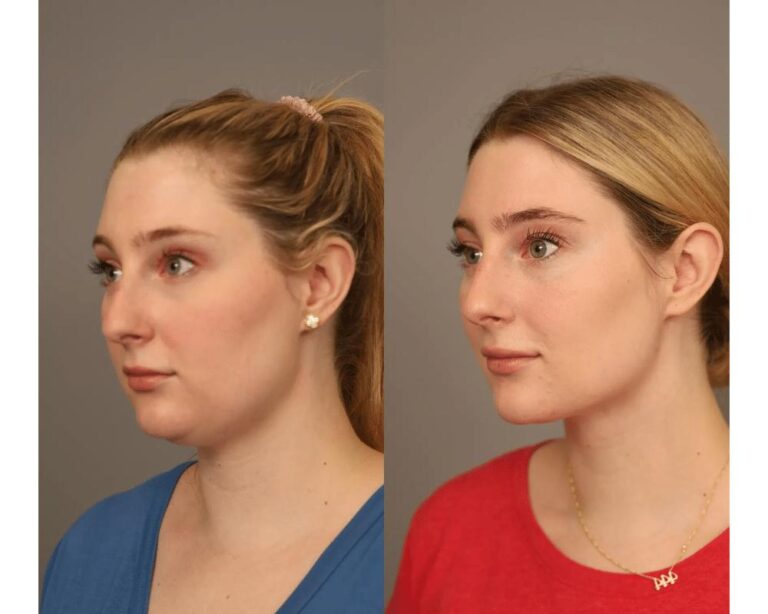
Sarah Mitchell is a dedicated aesthetic researcher with over a decade of experience analyzing cosmetic procedures. Obsessed with data and safety, she empowers patients with verified facts, realistic before-and-after results, and honest cost breakdowns.
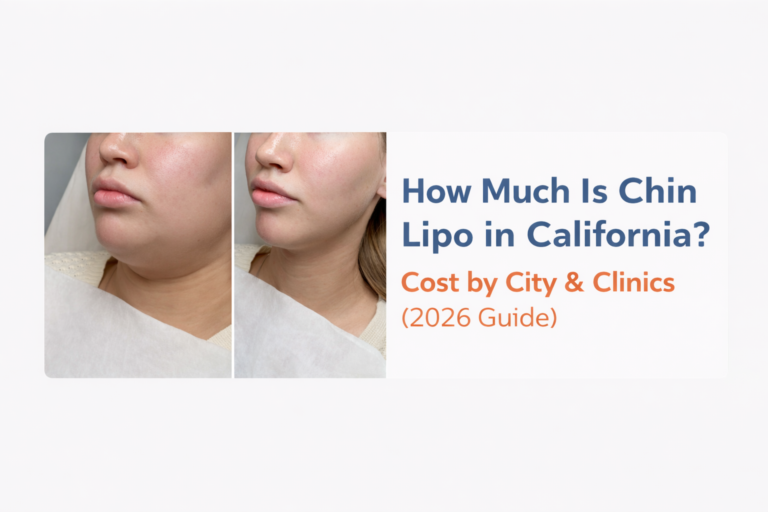
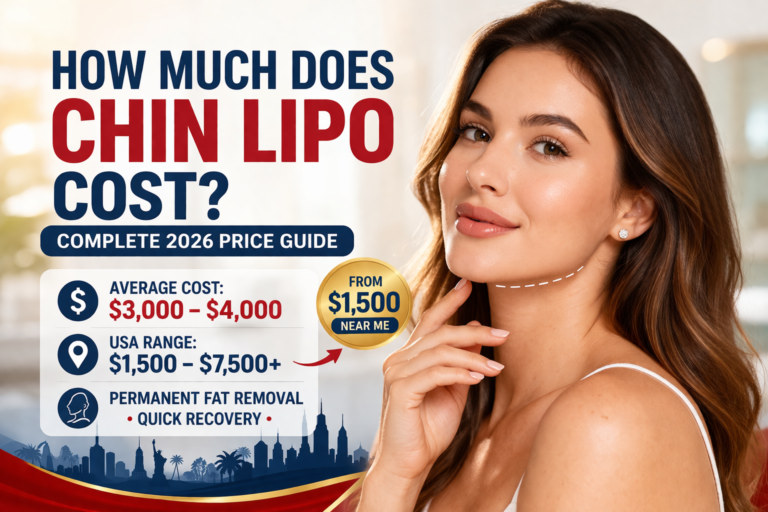
[…] These estimates include typical surgeon fees and basic facility charges but may not include additional treatments such as skin tightening or neck contouring. For double chin lipo cost may be different so you can check our complete guide on the double chin liposuction cost. […]